
Optimize Crop Production with Accurate Manure Testing

Manure is a valuable resource, providing nutrients for crop production and improving the health and quality of soil when applied correctly. Understanding the true nutrient value in your manure is important since composition can vary depending on many different physical and environmental factors.

Need Help Choosing the Right Manure Testing Package?

Whether you’re testing manure for compliance purposes or are looking to utilize it as a part of your fertility program, AgSource Laboratories’ easy-to-understand reports provide the information you need to manage your nutrients.

Stay Compliant with Reliable Manure Testing

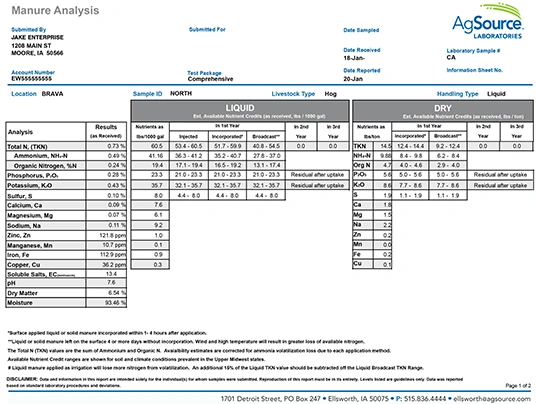
Get the information you need for nutrient management planning

Determine the True Nutrient Value of Your

Manure value varies by source – don’t rely on general “book” values

Certified Manure Analysis

AgSource holds certifications from the MN department of Agriculture

Trusted Laboratory Testing Standards

AgSource Laboratories follows strict and rigorous testing standards

Why Choose AgSource for Manure Testing?

Ready to Get Started with Manure Testing?

Manure Testing Companion Service

Nutrient Management Services

Our skilled team has over 100 years of experience delivering expert advice to growers and the agricultural community.

Woman testing soil next to four wheeler

Frequently Asked Questions About Manure Testing

Manure testing measures the nutrient content of manure so you can apply it more accurately and efficiently. Because nutrient levels vary based on animal type, feed, storage, handling, and environmental conditions, relying on average values can lead to over- or under-application. Laboratory analysis helps maximize manure’s fertilizer value, improve crop performance, reduce input costs, support environmental stewardship, and provide reliable data for nutrient management decisions.
Manure should generally be tested before each land application or at least once per year. More frequent testing is recommended if manure sources, animal diets, storage methods, or management practices change, as these factors can significantly affect nutrient composition. Regular testing helps ensure application rates are based on current nutrient levels rather than estimates.
The nutrients included depend on the selected testing package. Standard manure testing typically measures dry matter, total nitrogen (TKN), phosphorus, potassium, and sulfur. More comprehensive packages may also include analyses for ammonium nitrogen, calcium, magnesium, copper, iron, manganese, sodium, zinc, pH, electrical conductivity (soluble salts), organic matter, and other parameters to support nutrient management and agronomic decision-making.
To obtain accurate results, collect a representative sample from multiple locations within the manure source, thoroughly mix the material, and submit the recommended amount in a clean, properly labeled container. Avoid sampling only from the surface or a single location, as nutrient concentrations can vary throughout storage. Following your laboratory’s sampling instructions helps ensure the test accurately represents the manure being applied.
Turnaround time depends on the analyses requested and laboratory workload. Most routine manure testing results are available within a few business days of the laboratory receiving the sample, while more comprehensive analyses may require additional processing time. Contact AgSource for current turnaround estimates based on your selected testing package.
The right package depends on your nutrient management goals. Basic packages provide essential macronutrient information for routine fertilizer planning, while more advanced packages include secondary nutrients, micronutrients, ammonium nitrogen, pH, soluble salts, and other analyses for more comprehensive management. If you’re unsure which package best fits your operation, AgSource’s nutrient management experts can help you select the appropriate option.
Yes. Manure testing provides accurate nutrient values, allowing it to be credited toward your fertilizer program. By knowing how much nitrogen, phosphorus, potassium, and other nutrients are available, you can better match application rates to crop needs, reduce unnecessary commercial fertilizer applications, improve nutrient use efficiency, and help minimize nutrient losses to the environment.
Many nutrient management plans rely on current manure analysis to calculate accurate application rates. In some regions or operations, manure testing may also support regulatory or permit requirements related to nutrient management. Even when not required, laboratory testing provides more accurate data than published average values, helping improve nutrient planning, document management practices, and support informed agronomic decisions.

Contact Us