Meet Mikhayla - AgSource Region Manager | Dairy Field Operations
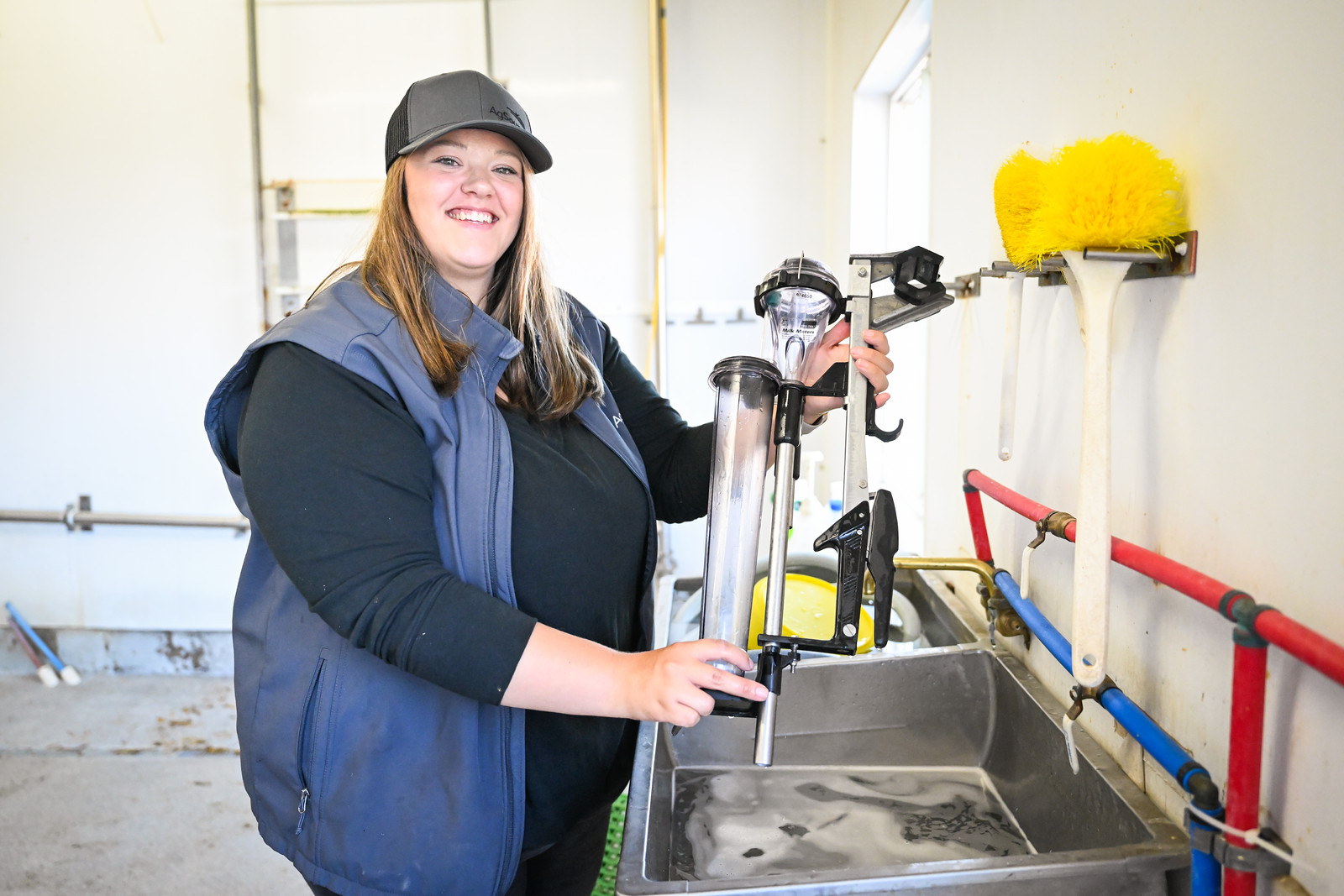
Behind every smooth test day, every report that lands in your inbox, and every phone call answered is a team working to make sure our members get the most out of their AgSource data. We sat down with Mikhayla Westra, an AgSource Region Manager, to talk about what her job looks like day to day, what she wishes more producers knew about their reports, and how she got her start in the dairy industry. Here’s what she had to say.
How long have you been with AgSource, and what drew you to dairy field operations?
I’ve been with AgSource for just over seven years, which honestly feels crazy! I was drawn to DHI when I was in college because I knew I wanted a job where I could still be on farms and involved in the dairy industry.
What does a typical week look like for you as an AgSource Region Manager, and what does your territory cover?
My days always start a little differently depending on what my team and farms need. I spend a lot of time with our customer service and lab teams, helping with herds that need adjustments before results go out, and coordinating with other DHI managers and our van routes manager on technician schedules and sample logistics. I also talk directly with producers throughout the day — report changes, resale orders, updated herd info, you name it. No two days are exactly the same, but they all revolve around supporting our team, our customers, and ultimately, the cows.
My Wisconsin territory covers a large portion of central and northeastern Wisconsin, extending from the Clark County area in the west across to the eastern part of the state and down to Fond du Lac. I also manage our team in Colorado. Because these territories are so spread out, a big part of my job is making sure we have the right technicians in the right areas so every farm receives consistent, reliable service.
What’s one thing you wish more producers understood about getting the most out of their AgSource data?
Sometimes producers see testing as another monthly chore rather than a management tool. There’s a lot of information in our reports, and you don’t have to use every piece of it — the goal is finding what’s useful to your operation and building from there. My advice: don’t be afraid to ask questions. If something doesn’t make sense, or you want to see something you currently can’t, reach out. Most of our reports are customizable, and that’s exactly what we’re here for!
When you’re reviewing a herd’s data — SCC trends, DIM, cull list — what are the first things you look for to flag a potential issue?
I’m usually looking for trends rather than one number that looks a little off. I’ll look at SCC and mastitis trends, DIM, fresh cows, reproduction, and the cull list to see if anything stands out or if there are changes happening over time. I also like to compare what the data is telling us with what the producer is seeing in the barn. Sometimes the numbers help explain something they’ve already noticed, and other times they bring attention to something before it becomes obvious on the farm.
Can you share an example of a time your insights helped a producer catch a problem early or make a management change that paid off?
One area I feel very strongly about is the strength and value of the diagnostic testing we offer. It’s common for a herd to come on test because they’re trying to get their overall cell count under control, and I really enjoy being able to offer them more than just the DHI testing side of things. We can combine the milk and production data they’re getting through DHI with the diagnostic services available through our lab — different PCR testing options, as well as the ability to pool samples from higher cell count cows and work with the farm and their veterinarian to identify where problems are coming from.
I’ve really enjoyed seeing the results when farms use those tools together. They’re able to identify problem cows within the herd, make more informed management decisions, and over time bring their overall cell count down. To me, that’s one of the biggest strengths of what we can offer — we’re not just giving a producer a number and sending them on their way. We can help them use that information to identify a problem and work toward a solution.
Do you have a farm background yourself, or how did you learn the dairy industry?
I did not grow up on a dairy farm but was surrounded by them my entire childhood. My grandparents owned a farm, and I started working on a few neighboring farms when I was 10 years old. As time went on, I just grew to love the lifestyle, and I started showing dairy cattle and working on larger and different farms throughout high school and college.
Outside of work, what do you like to do?
Most of my time is spent with my family. I also really enjoy gardening and growing flowers, which has turned into a small flower business on the side. I also do quite a bit of baking, so there’s usually something going on in the kitchen or garden when I’m not working!
Want to get more out of your herd data? Whether you’re a current member or exploring DHI testing, our team is here to help. Explore our dairy services or contact our customer service team.